
"On rainy days"
1000 article(s) found
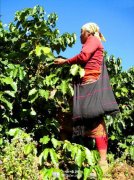
Cultivation techniques of High-quality Coffee trees
1. The cultivation of strong coffee seedlings 1. The selection of nursery land is close to water source, convenient for transportation, loam or sandy loam with loose and fertile soil, deep soil layer, good drainage, paddy field with PH value of 66.5 or early nursery land, and close to coffee garden. Turn over 20cm30cm meters to make fire and burn the soil, hoe fine and remove stones, branches and roots before sieving, or use mountain humus, add 8-

Starbucks Hometown Coffee City "Romantic Capital" Seattle, USA
Legend has it that there is a shepherd, accidentally found his sheep jumping, a closer look, the original sheep is eating a red fruit to lead to funny behavior strange, he tried to pick some of this red fruit back to boil, did not expect the room full of fragrance, boiled juice after drinking is more energetic, refreshing, from then on, coffee was born. Known as the romantic capital of Seattle, USA, no

The special function of black coffee: forecast the weather
On a rainy day, throw a cube sugar into a black coffee and observe the bubbles released by the cube sugar without stirring. If the bubbles gather in the center, the pressure is very high and the weather will clear up soon. The attachment of bubbles around the cup indicates that the air pressure is very low, either heavy rain or snow. The surface tension formed by the oil of coffee beans is the key factor to determine the position of bubbles. Climate factors are not

Yunnan small Grain Coffee belongs to Arabica? Yunnan coffee species and flavor and taste characteristics of producing areas
Professional coffee knowledge exchange more coffee bean information please follow the coffee workshop (Wechat official account cafe_style) front street-Yunnan small grain coffee introduction Yunnan coffee cultivation history can be traced back to 1892, large-scale cultivation of coffee is the mid-50th century, but also the first coffee planting base in China

Coffee growing conditions when is the right time to grow coffee? How to plant coffee trees?
Professional coffee knowledge exchange more information about coffee beans Please follow the coffee workshop (Wechat official account cafe_style) what are the fruits and seeds of coffee? Coffee is one of the three biggest drinks in the world, but do you know how it is grown? After learning today, the editor will tell you about planting coffee trees. The planting garden of coffee is reclaimed 1

What is the difference between the wet planing method and the conventional method of coffee treatment in Indonesia?
Professional coffee knowledge exchange more coffee bean information Please pay attention to Coffee Workshop (Wechat official account cafe_style) unlike other treatments, the wet planing method was created in Indonesia, and at present, Indonesia is the only coffee producer that mainly uses the wet planing method, which can be said to be a tailor-made coffee treatment for Indonesia. But what's wrong with this magical treatment?

Introduction to Kenyan Coffee Flavor characteristics of Kenya AB Kirin Yajia Longyedo Cooperative
Professional coffee knowledge exchange more coffee bean information please follow the coffee workshop (Wechat official account cafe_style) Kenya AB Kirinyaga Rungeto washed Kenya AB Kirin Yajia Longyado Cooperative washing Kenya AB Kirinyaga Rungeto washed production country: Kenya Kenya bean seed: SL34, K7, SL28 Origin: Kirin Asia Kiri

What are the flavors and characteristics of the eight regions of Guatemala? What are the grades?
What are the flavors and characteristics of the eight regions of Guatemala? What are the grades? In 1750, Father Jesuit introduced coffee trees to Guatemala, where German colonists developed the coffee industry in the late 19th century. Today, most of the coffee industry is produced in the south of the country. Coffee in Guatemala Origin: Sierra Madre Fire

Introduction to the characteristics of Malaba Coffee Flavor Manor in Rwanda
The watershed between the Congo basin and the Nile basin runs through Rwanda from north to south, with about 80 per cent of the country draining from the Nile and about 20 per cent from the Ruzi River and Lake Tanganyika. The longest river in the country is the Niabalongo River (Nyabarongo River) in the southwest, which turns north, east and southeast and flows into the Luwuwu River to form the Kagaila River.
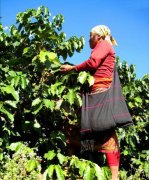
Coffee planting techniques what coffee planting techniques are there? How do you grow coffee? How to grow coffee?
1. The cultivation of strong coffee seedlings 1. The selection of nursery land is close to water source, convenient for transportation, loam or sandy loam with loose and fertile soil, deep soil layer, good drainage, paddy field with PH value of 66.5 or early nursery land, and close to coffee garden. Turn over 20cm30cm meters to make fire and burn the soil, hoe fine and remove stones, branches and roots before sieving, or use mountain humus, add 8-

Introduction to the planting Climate of Coffee in Yunnan, China
At present, Yunnan coffee production is mainly distributed in Pu'er (180000 mu), Baoshan (100000 mu), Dehong (120000 mu) and Lincang (20 mu). Most of them are catimor varieties. At present, more than 80% of them are used as raw materials for instant coffee processing, some are supplied to Nestl é, and some are exported to Europe and the United States by local traders. From the grading criteria of specialty coffee

Introduction to the planting Climate of Coffee in Yunnan Province
At present, Yunnan coffee production is mainly distributed in Pu'er (180000 mu), Baoshan (100000 mu), Dehong (120000 mu) and Lincang (20 mu). Most of them are catimor varieties. At present, more than 80% of them are used as raw materials for instant coffee processing, some are supplied to Nestl é, and some are exported to Europe and the United States by local traders. From the grading criteria of specialty coffee

Introduction to the planting Climate of Coffee in Yunnan, China
At present, Yunnan coffee production is mainly distributed in Pu'er (180000 mu), Baoshan (100000 mu), Dehong (120000 mu) and Lincang (20 mu). Most of them are catimor varieties. At present, more than 80% of them are used as raw materials for instant coffee processing, some are supplied to Nestl é, and some are exported to Europe and the United States by local traders. From the grading criteria of specialty coffee

Jamaica Blue Mountain Coffee Geographic location, Regional Climate
The unique flavor of Blue Mountain Coffee is related to the unique geographical location and climatic conditions of Blue Mountain. Blue Mountain is located in the coffee belt between 25 degrees north latitude and 25 degrees south latitude, with fertile new volcanic soil, fresh air, no pollution, rainy all the year round and great temperature difference between day and night. Most importantly, clouds cover the top of the mountain every afternoon, not only as a natural shade for coffee trees, but also for coffee trees.

Introduction of varieties in producing areas with long-lasting aroma and taste characteristics of coffee from Kimmel Manor, Rwanda
Rwanda has a temperate and tropical plateau climate, and because of its high altitude, its temperature is lower than that of typical equatorial countries. The daily temperature in Kigali, which is located in the middle of the country, is generally between 12 and 27C, with a relatively wide range of fluctuations throughout the year.

Coffee Man Story | former BMW junior director gave up stable and high salary to pursue coffee dream
Professional baristas follow the coffee workshop (Wechat official account cafe_style) Chen Huiqi, a good-looking 20-something with tens of thousands of followers on IG, has been working since she was 13, just to realize her coffee dream. Once a group leader of BMW, she decided to give up running a coffee car with a stable and high salary after saving enough money more than a year ago. Used to set up stalls and sell them everywhere, but now they are fixed in Taiwan.
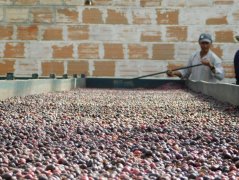
Effect of roasting degree on flavor of Colombian coffee beans from coffee factory to cup coffee bean production
Coffee production: timeline from coffee factory to cup Colombian coffee plants grow on steep slopes, usually dotted with banana plants, providing shade and spongy water. Coffee plants blossom and turn into coffee cherries. These will start green and then mature when they turn red. Coffee cherries are picked twice a year, usually during the rainy season, and can be picked every day or at most every 8.

Description of Rwanda Coffee Flavor with more uniform drying; introduction to the taste characteristics of fine coffee beans
Rwanda is located in the south of the equator in east-central Africa, a landlocked country. It is bordered by Tanzania to the east, Burundi to the south, Zaire to the west and northwest, and Uganda to the north, with a land area of 26338 square kilometers, ranking 149th among all countries in the world and close to Burundi, Macedonia, Haiti and Albania. Rwanda is located in east-central Africa, bordered by the Democratic Republic of the Congo to the west.

Tasting and Evaluation of Guatemala Fine Coffee Bean
Guatemala is one of the most important coffee-producing countries in Central America. The mountains in Guatemala extend for a long time, and the regional climate varies from one place to another. Therefore, eight coffee-producing areas in Guatemala are created. They are all located on the highland terrain with subtropical climate. The rainfall is abundant and stable. The fertile volcanic ash soil is the perfect environment for coffee trees to grow. [Plan del Guayabo] Located in Volcn de Suchitn Volcano

Introduction to Coffee Plantation in India
Grade A coffee beans in India have always been a kind of coffee strongly concerned by coffee lovers all over the world because of their unique processing methods. From May to June every year, it is the monsoon period in India, and the rainy and dry seasons occur repeatedly. During this period, the coffee should be piled to a height of 12cm to 20cm, spread on one side of the tall building and stacked for about five or six days. Rake coffee beans from time to time so that the sun can shine.